
Sprinkler System Repair
Careful diagnosis and practical repairs for systems that leak, skip zones, or will not run.
Explore this service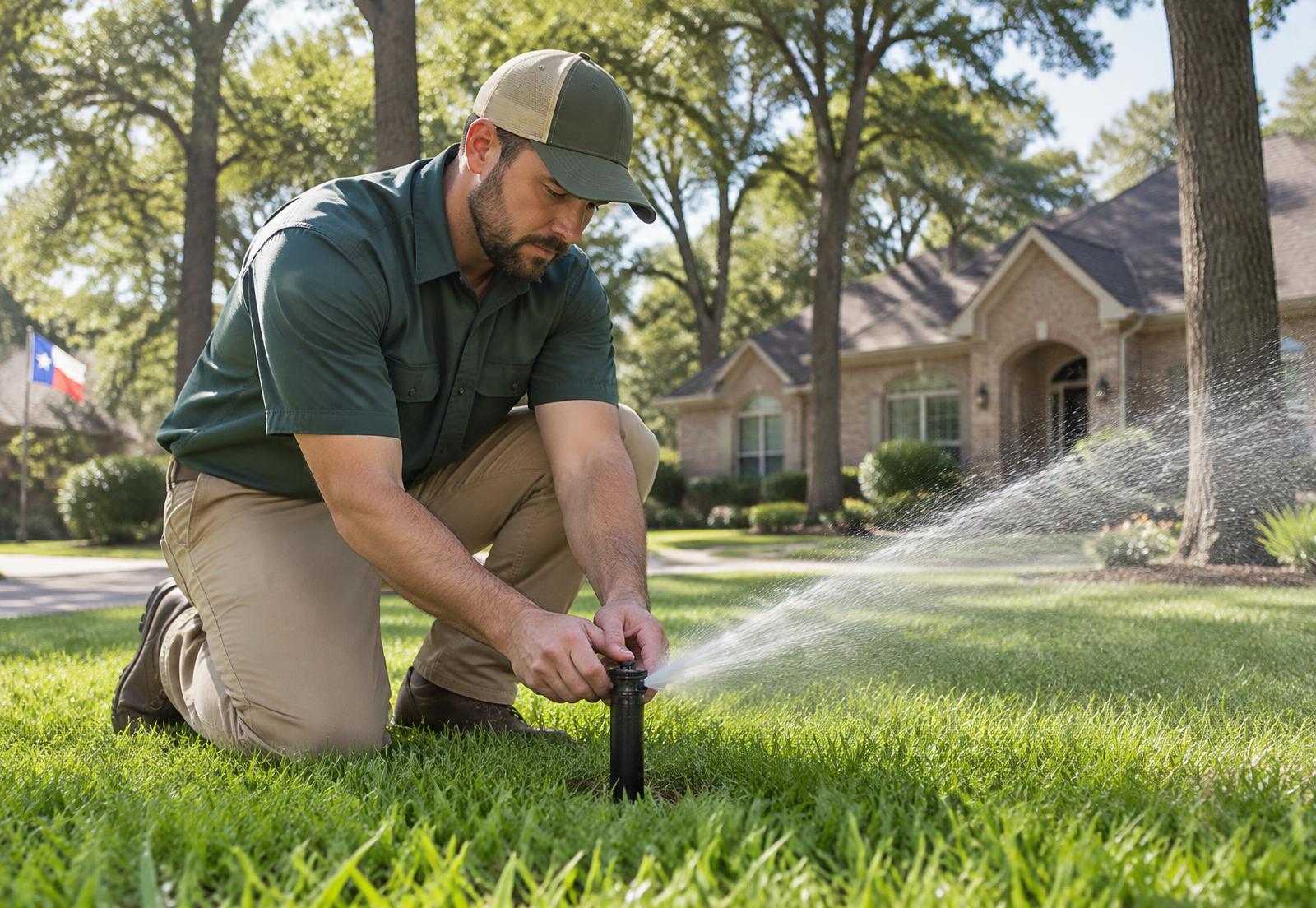
Clear diagnosis and careful sprinkler repairs for leaks, broken heads, inactive zones, controller problems, and uneven watering across the Fulshear area.
Start with the symptom. We look at the complete system so a dry area, wet valve box, or failed zone leads to the right repair.
Careful diagnosis and practical repairs for systems that leak, skip zones, or will not run.
Explore this serviceFind hidden irrigation leaks before they waste more water or soften the ground around your home.
Explore this serviceReplace broken, tilted, clogged, or mismatched heads and restore even coverage.
Explore this serviceDiagnose valves that chatter, seep, stay open, or leave an entire zone inactive.
Explore this serviceTroubleshoot timers, weather sensors, field wiring, and smart controller upgrades.
Explore this serviceA full-zone inspection and adjustment before heat, travel, or a new watering season.
Explore this serviceSolve dry strips, overspray, runoff, and mismatched irrigation after landscapes change.
Explore this service
Irrigation failures often overlap. Low pressure might come from a leak, a valve, the supply, or mismatched nozzles. We work through the evidence before recommending a fix.
Describe the affected zone, leak, controller message, or coverage problem.
The system is run methodically to narrow down the actual source of the problem.
The affected component is addressed, then coverage and operation are checked again.
Open a city for local conditions, then choose the repair that matches the symptom.
Why water runs into the street on Gulf Coast clay, and what to change besides the timer.
Read the guideA rain sensor, a bypass switch, and a program can each ignore the weather. Here is the order to check them.
Read the guideNo invented prices, promises, or review counts. Just straightforward information.
The cause may be a controller setting, broken field wire, failed solenoid, closed valve, or water-flow problem. Testing each link in that chain avoids replacing the wrong part.
Yes. Buried fitting and lateral-line leaks may first appear as a soft patch, low pressure, persistent runoff, or unusual water use rather than a visible geyser.
No. Nozzles should match the head type, distance, arc, pressure, and nearby heads. Mixing incompatible precipitation rates can create wet and dry areas in the same zone.
A complete inspection at least once a year is a useful baseline. Recheck after freezes, major landscaping, construction, or any sudden change in coverage or water use.
Share the symptoms, your city, and the best phone number. We follow up to plan the next step.